

Teeth grinding, also known as bruxism, is the habit of clenching, grinding, or gnashing the teeth. It can occur during the day or while sleeping and may be associated with stress, muscle tension, bite imbalances, sleep-disordered breathing, or TMJ-related issues. A professional evaluation can help identify factors that may be contributing to the problem.
Symptom
Restful Sleep Starts with a Relaxed Jaw
Grinding or clenching your teeth at night might seem harmless, but it’s often a sign of deeper dysfunction. Bruxism can lead to enamel loss, headaches, facial pain, and disrupted sleep. We uncover the root cause, whether it’s airway restriction, stress, or jaw misalignment, and create a non-invasive plan that restores healthy sleep and protects your joints.

Why People Grind Their Teeth
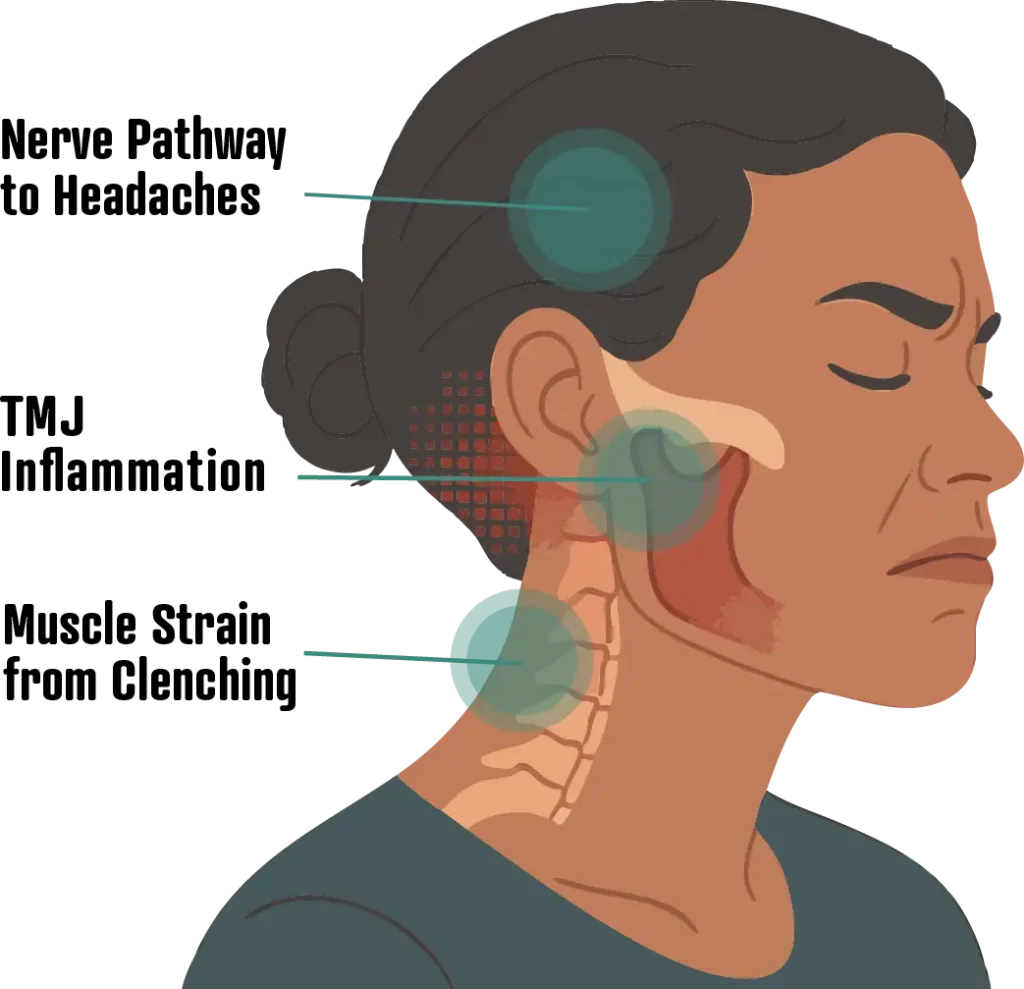
Bruxism is common during sleep and can damage enamel, overload the TMJ, and trigger head and neck pain. While stress can play a role, many cases are connected to the airway. When breathing narrows at night, the brain may recruit the jaw muscles to clench or shift the lower jaw in an attempt to restore airflow. Over time this reflex strains the joints and surrounding muscles.
“Sleep bruxism has been classified as a sleep-related movement disorder and is strongly associated with both sleep-disordered breathing and temporomandibular disorders.”
Balasubramaniam R, Klasser GD, Cistulli PA, Lavigne GJ. J Dent Sleep Med. 2014;1(1):27–37.
“In adults with obstructive sleep apnea, the occurrence of sleep bruxism is elevated, suggesting that increased respiratory effort can trigger jaw muscle activity during sleep.”
Journal of Clinical Sleep Medicine.
Our team at the TMJ & Sleep Therapy Centre of Raleigh-Durham evaluates sleep, airway size, jaw position, bite mechanics, and muscle balance to find your specific drivers. Then we create a non-surgical plan to protect your teeth, calm the TMJ, and improve sleep quality.
When To Seek Treatment
Worn or Flattened Teeth
Chips, flattened cusps, or new sensitivity indicate forces strong enough to erode enamel and load the TMJ.
Morning Jaw or Facial Pain
Waking with tight, sore muscles points to overnight bracing that often accompanies airway restriction.
Cracked Restorations or Broken Teeth
High bite forces from grinding can fracture fillings, crowns, or natural enamel and inflame the joint capsule.
Interrupted or Poor Sleep
Frequent micro-awakenings, snoring, or gasping suggest an airway component that should be screened and treated.
Relief begins with the right diagnosis
You do not have to wake up sore or exhausted. At the TMJ & Sleep Therapy Centre of Raleigh-Durham, we use precise, non-surgical care to protect your teeth, calm TMJ strain, and improve sleep quality.
Frequently Asked Questions About Teeth Grinding (Bruxism)
Teeth grinding can be confusing because it feels involuntary. These answers explain why it happens and how targeted, non-surgical care can help.
Yes. TMJ teeth grinding is a common concern because the jaw joints and surrounding muscles are closely connected. In some patients, teeth grinding may place additional strain on the temporomandibular joints, while TMJ dysfunction may contribute to muscle tension and clenching. A comprehensive evaluation can help determine whether TMJ and bruxism are affecting one another.
Common signs of bruxism include worn or chipped teeth, jaw pain, facial muscle soreness, headaches, jaw fatigue, tooth sensitivity, and disrupted sleep. Some patients may also experience clicking or popping in the jaw joints or wake up with tension in the face and neck.
Teeth grinding treatment depends on the underlying cause and the patient's specific needs. Treatment recommendations may include oral appliances, bite stabilization, TMJ therapy, stress management strategies, and addressing contributing sleep or airway concerns. The goal is to help reduce strain on the teeth, jaw muscles, and joints.
A mouth guard for teeth grinding may help protect the teeth from excessive wear and reduce pressure on the jaw joints and muscles. However, not all oral appliances are the same. A custom-fitted appliance designed by a qualified provider may offer better comfort, fit, and effectiveness than over-the-counter options.
TMJ and bruxism often occur together. Chronic clenching and grinding can place stress on the jaw joints and surrounding muscles, while TMJ dysfunction may contribute to abnormal jaw muscle activity. Because every patient is different, a thorough evaluation is important for developing an appropriate treatment plan.
You should consider seeking bruxism treatment if you experience jaw pain, headaches, damaged teeth, facial soreness, disrupted sleep, or ongoing grinding and clenching. Early intervention may help reduce the risk of additional wear on the teeth and strain on the jaw joints.
If you are searching for a teeth grinding dentist near you, the TMJ & Sleep Therapy Centre of Raleigh-Durham provides evaluations for patients experiencing teeth grinding, TMJ-related symptoms, and bruxism concerns. A personalized assessment can help determine the factors contributing to your symptoms and identify appropriate treatment options.