

It depends on program length and whether it is combined with other TMJ or airway care. We review the full fee at your consultation.
Orofacial Muscle Retraining
Myofunctional Therapy
A guided exercise program that retrains the tongue, lips and jaw to rest, breathe and swallow correctly — for TMJ, airway and sleep concerns in Raleigh, Cary and Durham.
TMJ & Sleep Therapy Centre of Raleigh-Durham
What Is Myofunctional Therapy?
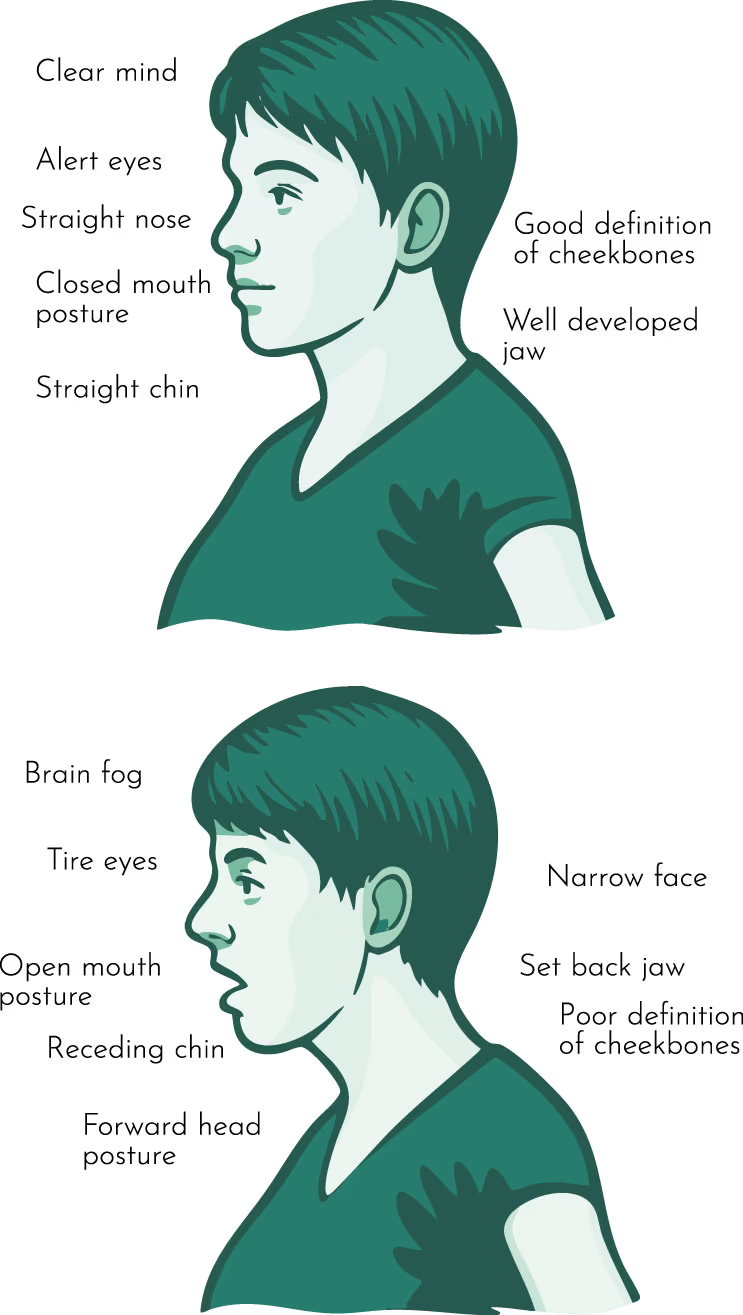
Myofunctional therapy is a structured exercise program that retrains the tongue, lips, jaw and airway muscles to work in balance. Correcting low tongue posture and an abnormal swallow is central to managing sleep apnea and TMJ disorders.
“Current literature demonstrates that myofunctional therapy decreases apnea-hypopnea index by approximately 50% in adults and 62% in children.”
Consider an evaluation for chronic mouth breathing, jaw or facial pain, snoring or restless sleep, or tongue thrust. We treat adults and children, and pair therapy with TMJ disorder care.
What Therapy Retrains
Nasal Breathing
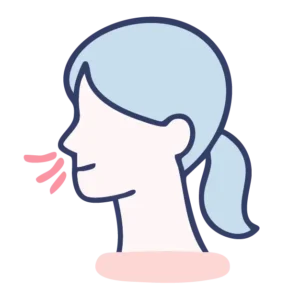
Replace mouth breathing with efficient nasal airflow, day and night.
Resting Tongue Posture
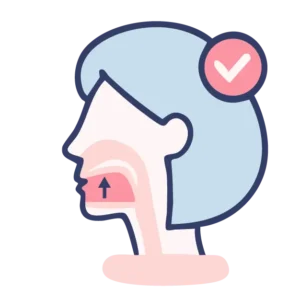
Train the tongue to rest against the palate, where it supports the jaw.
Closed Lip Seal
Hold a comfortable, closed-lip posture at rest and while chewing.
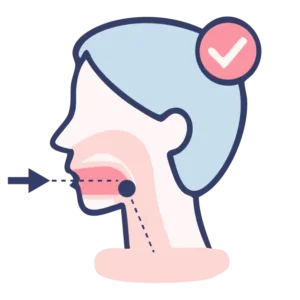
Proper Swallowing
Replace tongue thrust with a swallow that does not strain the jaw.
Myofunctional Therapy in Raleigh & Cary
An appliance protects teeth and opens the airway, but it does not change how the muscles work. Uncorrected breathing and swallowing patterns bring the symptoms back.
Functional Evaluation
We assess tongue mobility and resting posture, lip seal, breathing and swallow, alongside your jaw joints and airway.
Your Exercise Program
You learn a short daily set of exercises that strengthen and coordinate the tongue, lips and facial muscles.
Reinforce the Result
Therapy is often paired with tongue tie release or airway-focused pediatric care so the pattern holds.

Our Approach
Why Choose Us?
Myofunctional therapy is one of the specialized services we provide at the TMJ & Sleep Therapy Centre of Raleigh-Durham. Our focus is on identifying the root causes behind your symptoms and delivering safe, non-surgical solutions that support long-term health and comfort.
Your First Step Toward Relief Starts Here
Start with a Simple TMJ and Sleep Screening
Do You Have TMJ?
Take our quick 2-minute assessment to find out if your symptoms may be related to TMJ disorder.
Take TMJ Quiz
Sleep Apnea Risk?
Discover if your snoring, fatigue, or restless sleep could indicate sleep apnea with this brief screening.
Take Sleep Quiz
Our Commitment
Restore Healthy Function with Myofunctional Therapy
Jaw pain, mouth breathing and poor sleep don’t have to control your life. At the TMJ & Sleep Therapy Centre of Raleigh-Durham, myofunctional therapy addresses the root causes by retraining the oral muscles for long-term stability. Schedule your consultation today.
(919) 323-4242 Message UsMyofunctional Therapy Questions
Coverage varies by plan, and many treat it as an adjunct rather than a covered service. We verify your benefits and quote in writing first.
Our guide to myofunctional therapy exercises is a good start. What changes the pattern is a program matched to your own swallow and airway, corrected as you go.
Yes. Retraining the muscles that position the jaw takes strain off the joint, which is why we use it alongside TMJ disorder treatment.