

Snoring occurs when airflow is partially restricted during sleep, causing the tissues of the airway to vibrate. Common contributing factors include airway anatomy, nasal congestion, sleep position, excess weight, poor muscle tone during sleep, and certain sleep-related breathing disorders. A professional evaluation can help determine the underlying causes of snoring.
Symptom
Snoring
Snoring is often a warning sign of airway resistance or sleep apnea. At the TMJ & Sleep Therapy Centre of Raleigh-Durham, we uncover the cause and help you breathe freely at night.

Why Snoring Happens, and Why It Matters
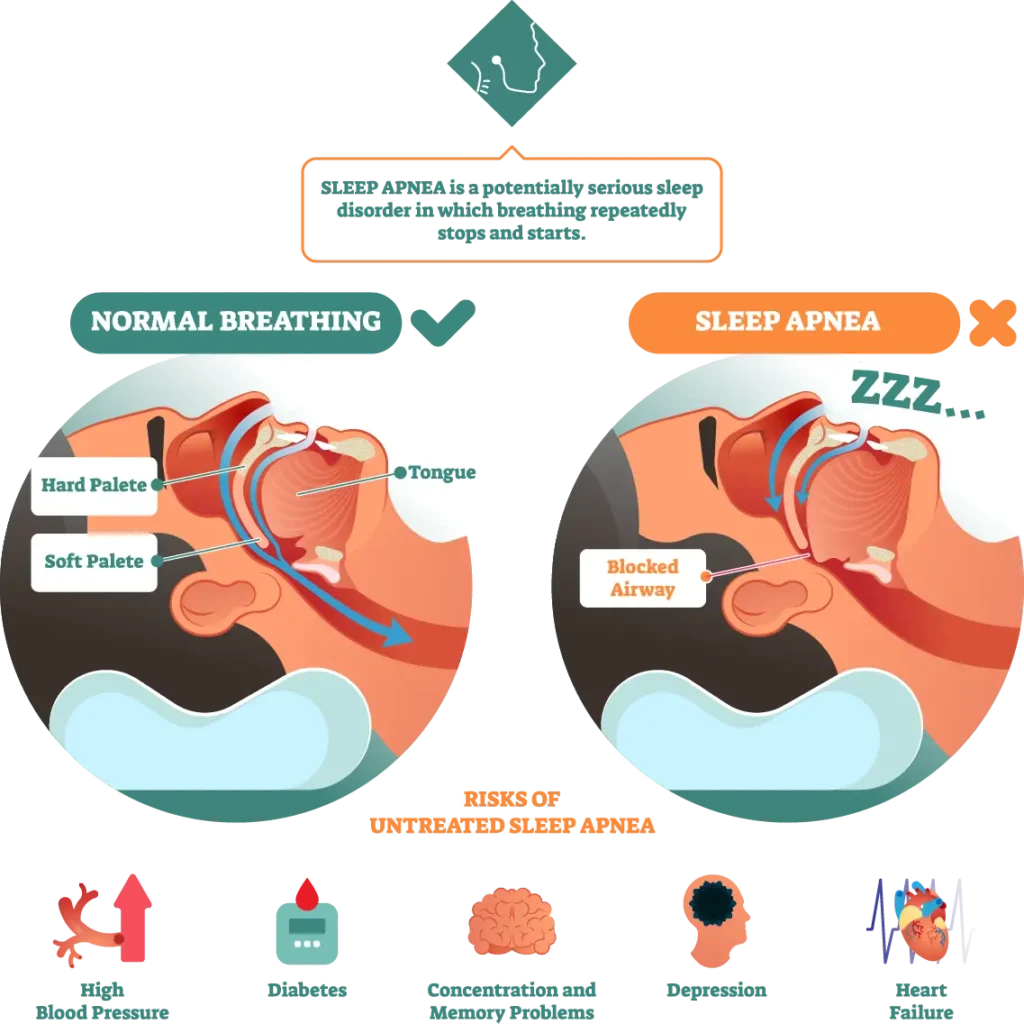
Snoring occurs when airflow is partially blocked during sleep, causing tissues in the throat or soft palate to vibrate. While occasional snoring may seem harmless, chronic snoring often signals airway instability that can progress to obstructive sleep apnea (OSA).
It’s also common in patients with TMJ disorders, as poor jaw position or tension in the facial muscles can narrow the airway.
“Snoring is the sound that occurs when air flows past relaxed tissues in your throat, causing the tissues to vibrate as you breathe.”
Mayo Clinic
“Snoring may be a sign of obstructive sleep apnea, a condition linked to heart disease, stroke, and daytime fatigue.”
National Heart, Lung, and Blood Institute
Our evaluation at the TMJ & Sleep Therapy Centre of Raleigh-Durham includes airway imaging, jaw and tongue position analysis, and sleep screening. By correcting structural imbalances and supporting nasal breathing, we help patients reduce or eliminate snoring without surgery or CPAP dependence.
When To Seek Treatment
Loud Nightly Snoring
Snoring loud enough to wake others or travel between rooms indicates tissue collapse and reduced airway flow.
Pauses in Breathing or Gasping
These are signs of sleep apnea. They often cause micro-arousals that fragment sleep and stress the heart.
Dry Mouth or Morning Headaches
Mouth breathing from airway obstruction reduces oxygen saturation and strains muscles of the jaw and neck.
Daytime Fatigue or Irritability
Interrupted sleep cycles lead to poor concentration, memory issues, and mood changes linked to airway restriction.
Relief begins with the right diagnosis
Snoring is more than a sound, it’s a signal. At the TMJ & Sleep Therapy Centre of Raleigh-Durham, we correct airway and jaw imbalances that cause snoring so you and your partner can rest peacefully again.
Frequently Asked Questions About Snoring
Snoring can stem from anatomy, airway tone, or sleep posture. These FAQs explain what’s behind it and how our team finds the right solution.
Many patients search for a snoring cure, but the most effective approach depends on the cause of the snoring. Some people experience significant improvement through lifestyle changes, oral appliance therapy, or treatment of underlying airway issues. A comprehensive assessment can help identify the most appropriate treatment options for your specific needs.
Snoring treatment may include oral appliance therapy, positional therapy, weight management, addressing nasal obstruction, improving sleep habits, or treating underlying sleep-disordered breathing. Treatment recommendations vary from patient to patient and are based on the factors contributing to the snoring.
Many patients ask, "Can TMJ cause snoring?" While TMJ disorders do not directly cause snoring, the relationship between jaw position, airway anatomy, and muscle function can sometimes influence breathing during sleep. A thorough evaluation can help determine whether TMJ-related factors may be contributing to airway concerns or sleep-related symptoms.
TMJ snoring concerns often involve the way the jaw, tongue, and airway interact during sleep. In some patients, jaw position may affect the amount of space available in the airway. Because every patient is different, a comprehensive evaluation can help identify whether TMJ dysfunction, airway anatomy, or other factors may be involved.
You should consider seeing a snoring doctor if your snoring is frequent, disruptive, worsening over time, or accompanied by symptoms such as daytime fatigue, morning headaches, restless sleep, or witnessed pauses in breathing during sleep. These symptoms may indicate an underlying sleep-related breathing disorder that warrants professional evaluation.
For some patients, oral appliance therapy may help reduce snoring by supporting a more open airway during sleep. These custom-fitted devices are designed to improve airflow and may be an alternative for certain individuals who are unable to tolerate other treatment options. A consultation can help determine whether oral appliance therapy may be appropriate for your situation.
If you are searching for snoring treatment near you, the TMJ & Sleep Therapy Centre of Raleigh-Durham, located in Cary, NC, provides comprehensive evaluations for patients experiencing snoring and sleep-related breathing concerns. Serving Cary, Raleigh, Durham, Chapel Hill, and surrounding Triangle communities, the Centre offers personalized treatment recommendations based on each patient's needs.