

TN pain is usually sudden, electric, and short in duration, often triggered by light touch or movement. TMJ pain is often dull, aching, or pressure-like and worsens with chewing or clenching. Many patients have elements of both, so evaluation is key.
Symptom
Trigeminal Neuralgia
Lightning-like facial pain can be life changing. At the TMJ & Sleep Therapy Centre of Raleigh-Durham, we help distinguish true neuralgia from TMJ-driven pain, reduce jaw triggers, and coordinate care so you can function again.

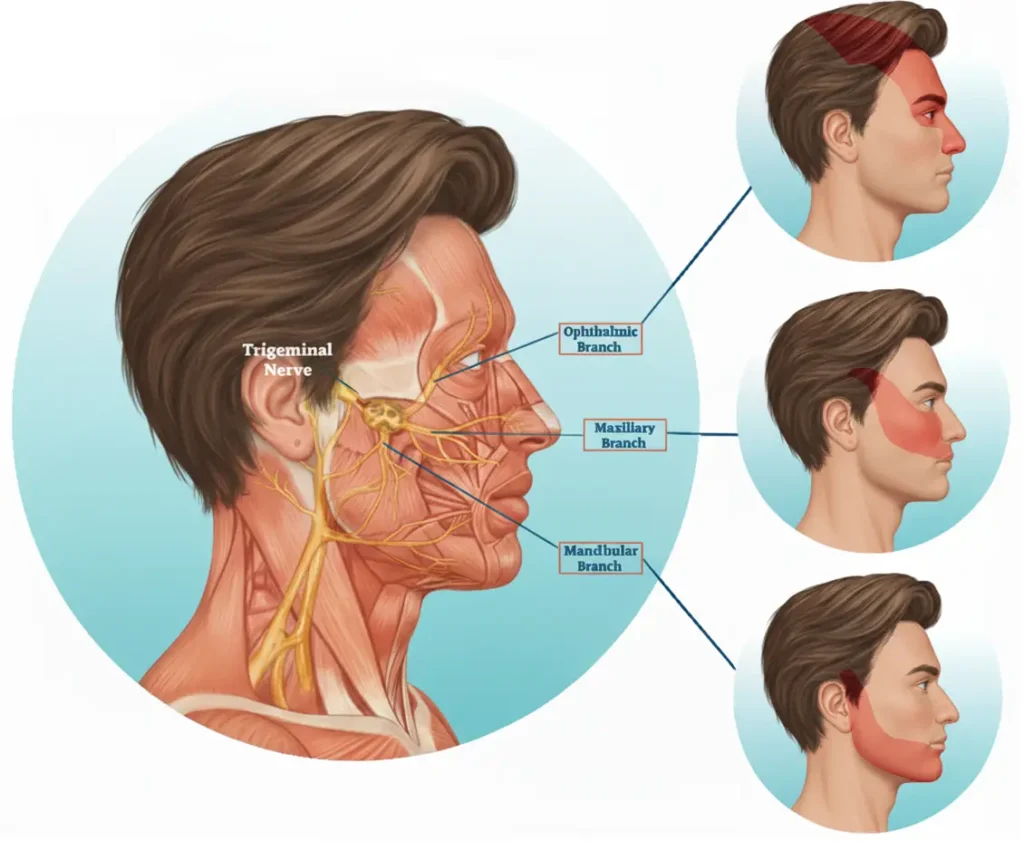
Understanding Trigeminal Neuralgia and TMJ Overlap
“Trigeminal neuralgia is a chronic pain condition that affects the trigeminal nerve, which carries sensation from your face to your brain.”
National Institute of Neurological Disorders and Stroke (NINDS)
“The pain is sudden and described as sharp, shooting, or like an electric shock.”
NHS
At the TMJ & Sleep Therapy Centre of Raleigh-Durham, we examine bite mechanics, TMJ joint health, craniofacial muscle balance, and known trigger zones. For many patients with facial pain, reducing clenching, stabilizing the jaw, and calming overloaded muscles decreases the frequency and intensity of attacks. If findings point to primary TN, we coordinate medical therapies and refer for imaging and neurologic care while providing supportive TMJ management.
When To Seek Treatment
Electric Shock Facial Pain
Brief, intense facial pain attacks triggered by light touch, brushing, talking, or cold wind are classic red flags.Jaw Use Triggers or Clenching
Chewing, speaking, or nighttime clenching can heighten nerve sensitivity. TMJ stabilization often reduces flare frequency.Touch-Sensitive Hotspots
Pain that sparks with gentle contact along the cheek, gum, or lip may indicate trigeminal nerve hyperexcitability.Facial Pain With TMJ Symptoms
Clicking, limited opening, or temple and jaw muscle tightness often point to overlapping TMJ drivers that can be treated.Relief begins with the right diagnosis
Facial pain that steals your routine deserves answers. At the TMJ & Sleep Therapy Centre of Raleigh-Durham, we calm jaw and muscle drivers and coordinate with your medical team so you have a clear path forward.
Frequently Asked Questions About Trigeminal Neuralgia
Trigeminal neuralgia can mimic or overlap with TMJ and myofascial pain. These answers explain the differences and how our team supports an accurate diagnosis and comprehensive plan.
Evidence Snapshot
- NINDS: Clear description of TN as a chronic pain condition involving the trigeminal nerve. Read more
- NHS: TN pain is often sharp, shooting, and triggered by everyday activities. See overview
Neurologists often start with medications that stabilize nerve firing. Refractory cases may be candidates for procedures recommended by neurosurgery. We coordinate closely while managing jaw mechanics and muscle triggers that can aggravate symptoms.
It can help reduce attack frequency or intensity when jaw strain or clenching amplifies neural irritability. Custom orthotics, muscle therapy, and trigger management reduce peripheral inputs that may provoke flares. We do this alongside your medical plan.
We map triggers, test jaw function, palpate craniofacial muscles, and screen the bite. If features suggest TN, we refer for neurologic assessment and imaging while starting gentle TMJ care to remove mechanical aggravators safely.
Most patients do not start with surgery. Many respond to medication and conservative measures. Surgical options are reserved for specific indications and are discussed by neurology or neurosurgery if symptoms remain severe.