

Not necessarily. While insomnia can lead to restlessness, many individuals turn or shift due to airway resistance, sleep apnea, gastroesophageal reflux, discomfort, or bruxism. We assess these underlying causes before determining the most effective treatment to ensure you are not pursuing an ineffective solution.
Symptom
Tossing & Turning
Restless sleep and constant changes in position can be signs of airway issues. At the TMJ & Sleep Therapy Centre of Raleigh-Durham, we identify the root cause so you can achieve restorative sleep once more.

Why Am I Tossing and Turning at Night?
“Insomnia is a prevalent sleep disorder that can hinder your ability to either fall asleep or remain asleep.”
Mayo Clinic
“Sleep apnea is a critical sleep disorder that can cause interruptions in breathing during sleep.”
NHLBI
At the TMJ & Sleep Therapy Centre of Raleigh-Durham, our team assesses sleep patterns, airway size and stability, jaw alignment, and indications of nocturnal clenching. If airway constriction induces micro-arousals, the body may shift positions to reopen the airway. Targeting the underlying issue can minimize tossing, soothe jaw and neck muscles, and promote restorative sleep.
When To Seek Treatment
Frequent Position Changes
You find yourself changing positions regularly or shifting sides frequently. This behavior may indicate an instinctive attempt to clear the airway or alleviate muscle strain.
Snoring or Gasping at Night
Persistent loud snoring, breathing interruptions, or gasping spells point to airway obstruction which disrupts sleep and leads to restlessness.
Morning Fatigue Despite Full Night
Waking up tired even after a full night of sleep, typically 7 to 8 hours, can indicate shallow sleep or frequent micro-arousals interrupting rest.
Jaw Soreness or Headache on Waking
Clenching your jaw at night may be a response to airway constriction. Experiencing headaches at the temples or jaw tension in the morning is common.
Relief begins with the right diagnosis
When your sleep is disrupted and you struggle to concentrate during the day, it may be time to investigate. At the TMJ & Sleep Therapy Centre of Raleigh-Durham, we identify the underlying issues and promote restful, uninterrupted sleep through non-invasive treatments.
Frequently Asked Questions About Tossing & Turning
Various factors contribute to restless sleep. This section clarifies the interplay between airway, jaw, and behavioral elements, helping us identify the true cause for effective treatment.
When the airway constricts, the brain initiates brief awakenings to restore airflow. These micro-arousals can lead to shifts in position, teeth grinding, or sudden movements that disrupt sleep. Enhancing airway stability minimizes these occurrences and decreases the frequency of positional changes during rest.
It can be. Tension in the jaw and neck often occurs when breathing is compromised. Addressing both airway stabilization and TMJ function can frequently reduce restlessness and alleviate morning discomfort simultaneously.
If your medical history indicates potential airway issues, such as snoring, gasping, or notable daytime drowsiness, a home sleep study or in-lab assessment can provide valuable insights. This information helps us determine whether sleep apnea or upper airway resistance is causing disturbances, so we can offer appropriate treatment.
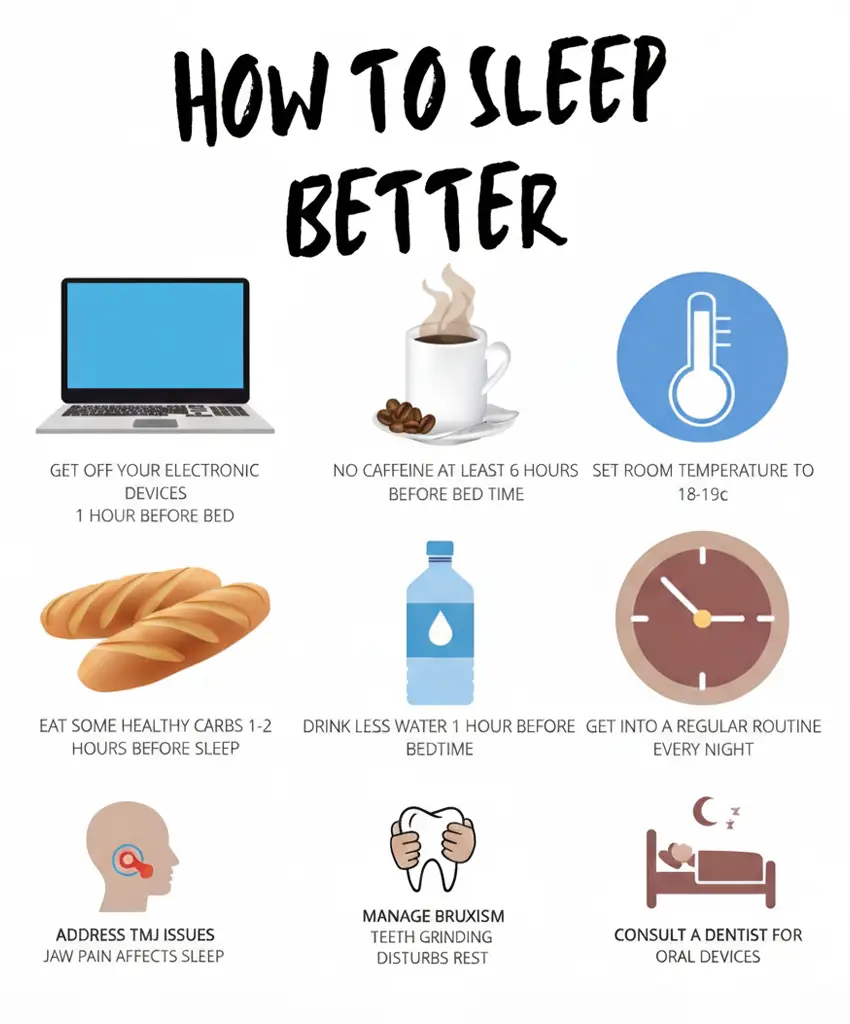
We customize our approach based on the underlying cause. Treatment options may include tailored oral appliances to keep the airway open, techniques to alleviate reflux or nasal blockage, TMJ therapies if teeth grinding is present, and guidance on sleep hygiene when behavioral aspects contribute.