

Most cases involve a combination of muscle overuse and joint irritation. Clenching or grinding, bite mechanics, and posture can all increase load on the joint. We test each factor so treatment targets the true driver of your pain.
Symptom
TMJ Pain
Persistent jaw pain is not normal. At the TMJ & Sleep Therapy Centre of Raleigh-Durham, we identify the true source and deliver non-surgical care that calms pain and restores function.

What Is Causing My TMJ Pain?
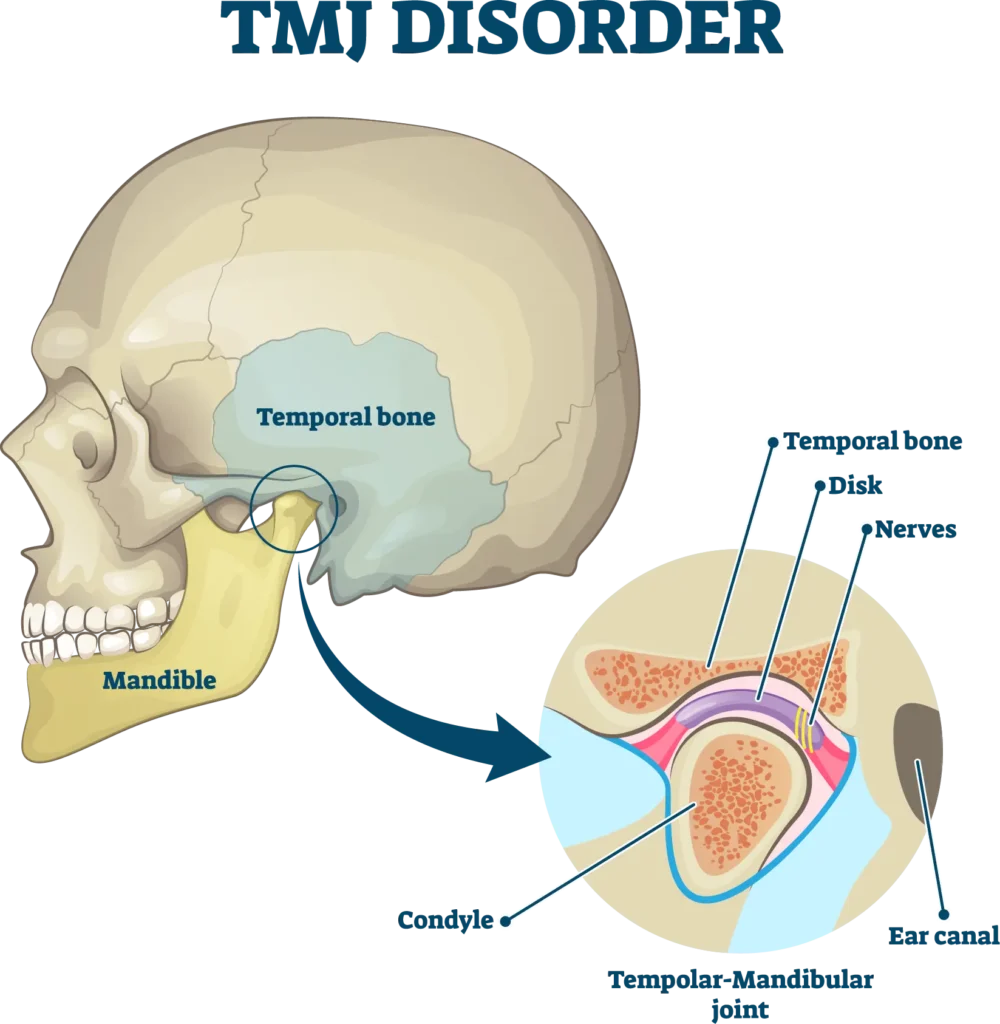
TMJ pain can arise from irritation within the joint, overuse of jaw and neck muscles, or a bite that places the jaw in a stressed position. Many patients also clench or grind during sleep, which increases load on the joint and surrounding tissues. Care that only masks pain often fails. Precise diagnosis and targeted, conservative treatment usually provide the best outcomes.
“Temporomandibular disorders are a group of more than 30 conditions that cause pain and dysfunction in the jaw joint and the muscles that control jaw movement.”
National Institute of Dental and Craniofacial Research (NIDCR)
“Temporomandibular disorders affect between 5% and 12% of the population and present with symptoms such as headache, bruxism, jaw pain, popping or clicking, neck pain, tinnitus, and dizziness.”
American Family Physician, 2023 Rapid Evidence Review
At the TMJ & Sleep Therapy Centre of Raleigh-Durham, we assess joint health, bite mechanics, airway and sleep factors, and muscular balance. Then we create a plan that protects the joint, relaxes overworked muscles, and addresses contributors like clenching or posture.
When To Seek Treatment
Jaw Pain With Chewing
Sharp or aching pain during meals points to joint inflammation or muscle overload that should be treated early.
Clicking, Popping, or Locking
Joint noises or limited opening suggest disc or alignment changes. Stabilizing the jaw helps prevent worsening pain.
Morning Tightness or Headaches
Waking sore or with temple headaches often reflects nighttime clenching that strains the joint and muscles.
Ear Pressure or Tinnitus
Fullness, fluctuating ringing, or pain near the ear can be modulated by jaw movement in many TMD patients.
Relief begins with the right diagnosis
You do not have to live with aching joints or tight jaw muscles. At the TMJ & Sleep Therapy Centre of Raleigh-Durham, we use precise, non-surgical care to calm pain, protect the joint, and restore comfortable function.
Frequently Asked Questions About TMJ Pain
TMJ pain has multiple contributors. These answers explain how we diagnose the cause and why conservative, targeted care is usually the best first step.
Surgery is rarely the first choice. Evidence-based guidance favors conservative options such as custom appliances, targeted physical therapy, self-care, and behavioral strategies. Escalation is reserved for specific structural problems or refractory pain.
We review your history, evaluate joint movement and tenderness, assess muscle function, and screen for sleep and airway contributors. Imaging or jaw tracking may be used when findings suggest joint pathology that needs closer study.
Yes. The jaw, head, and neck share muscles and nerve pathways. Overworked jaw muscles and joint inflammation can trigger temple headaches and cervical strain. Treating the jaw often reduces these symptoms together.
Many patients notice improvement within the first several weeks as inflammation decreases and muscle load is reduced. Stabilization typically continues over a few months with appliance wear, exercises, and habit changes.