

Yes. The muscles that control your jaw share attachments with those that support your head and neck. When jaw movement is unbalanced, it creates ongoing tension through the cervical region, leading to soreness and stiffness.
Symptom
Neck Pain That Never Seems to Go Away?
TMJ dysfunction and airway strain often cause persistent tension through the neck and shoulders. At the TMJ & Sleep Therapy Centre of Raleigh-Durham, we treat the cause — not just the discomfort — so you can move freely again.

Understanding the Link Between TMJ and Neck Pain
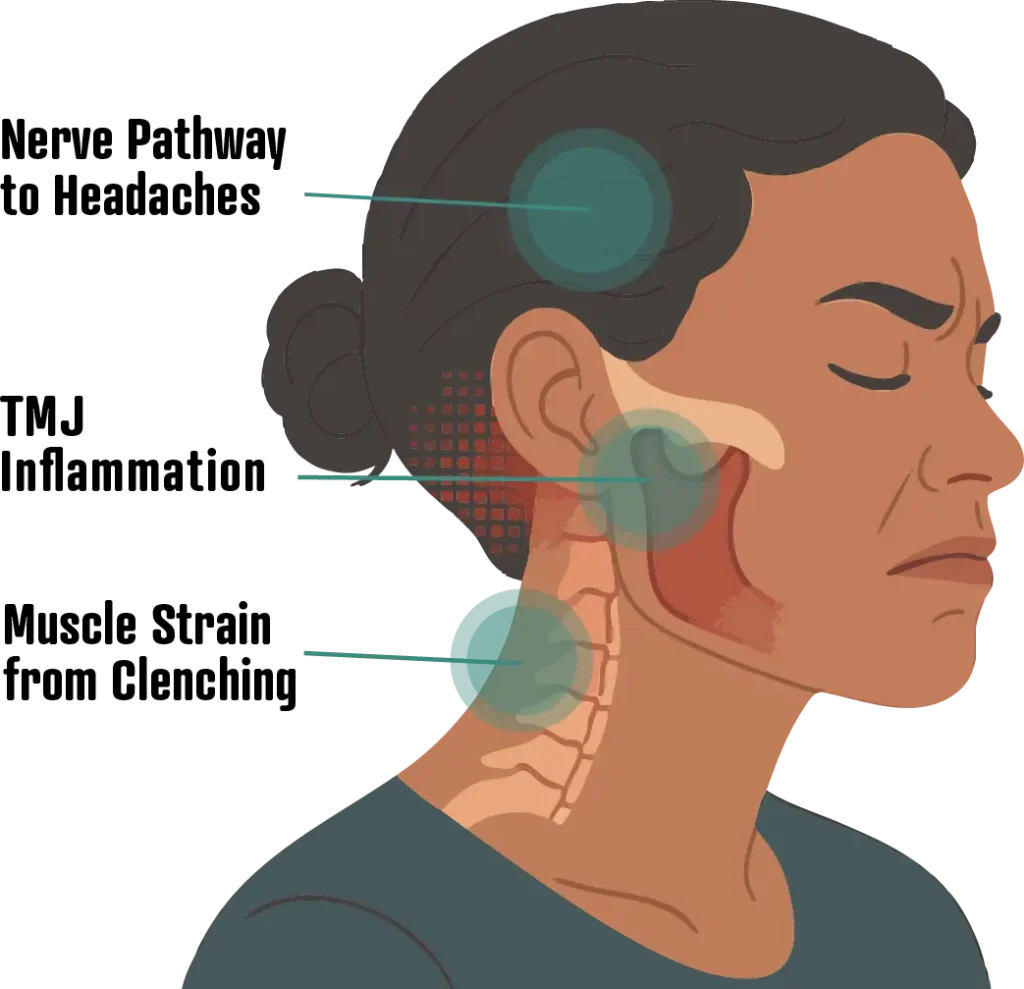
Neck pain is one of the most common symptoms associated with temporomandibular joint (TMJ) disorders. The muscles that stabilize your jaw are closely connected to those that support your head and neck. When your bite is misaligned or the TMJ becomes inflamed, surrounding muscles overwork to compensate. Over time, this creates chronic tension, stiffness, and limited range of motion.
At the TMJ & Sleep Therapy Centre of Raleigh-Durham, we identify how your jaw position, posture, and airway function interact to create muscle fatigue and nerve irritation. By restoring proper alignment and relieving strain, we help your neck relax naturally — without medications or surgery.
When To Seek Treatment
Chronic Neck Tightness
Tightness that worsens through the day or after clenching the jaw often points to TMJ-related strain.
Limited Range of Motion
Difficulty turning your head or looking up may come from imbalanced muscles compensating for jaw dysfunction.
Headaches and Shoulder Pain
When the neck muscles overfire to stabilize posture, pain often radiates into the shoulders and base of the skull.
Pain Worsens With Stress or Clenching
Clenching during the day or while sleeping increases tension along the jawline and down the cervical spine.
Relief begins with the right diagnosis
Lasting neck pain may start with your jaw. At the TMJ & Sleep Therapy Centre of Raleigh-Durham, our team provides precise, non-surgical TMJ care that restores balance, reduces muscle strain, and relieves pressure on the neck and shoulders.
Frequently Asked Questions About Neck Pain
Neck pain is often treated as an isolated problem, but for many patients, it’s part of a larger pattern tied to TMJ dysfunction. Here are some of the most common questions we hear about the jaw–neck connection.
Activities that use the jaw, like chewing or prolonged speaking, activate the same muscle groups that stabilize the neck. If your TMJ is strained, those muscles tighten and fatigue faster, worsening neck discomfort.
Absolutely. Forward head posture or long hours at a desk place constant load on the jaw and cervical muscles. Over time, this can magnify TMJ tension and cause chronic neck pain.
TMJ and spinal alignment are interdependent. Even if imaging shows a healthy neck, pain may persist if your jaw position or bite mechanics are off. We assess both to locate the root of your pain.
Treatment focuses on balancing jaw function and relieving muscle strain. We use custom orthotics, manual therapy, and posture correction to restore harmony between the TMJ and cervical spine.