

Muscle spasms occur when the jaw muscles must compensate for misalignment or inflammation in the TMJ. The constant effort to stabilize the joint leads to fatigue, tightness, and eventually involuntary contractions.
Symptom
Muscle Spasms That Won’t Let You Relax?
Overworked jaw and neck muscles are often a sign of underlying TMJ imbalance. At the TMJ & Sleep Therapy Centre of Raleigh-Durham, we relieve tension at its source — not just where you feel the pain.

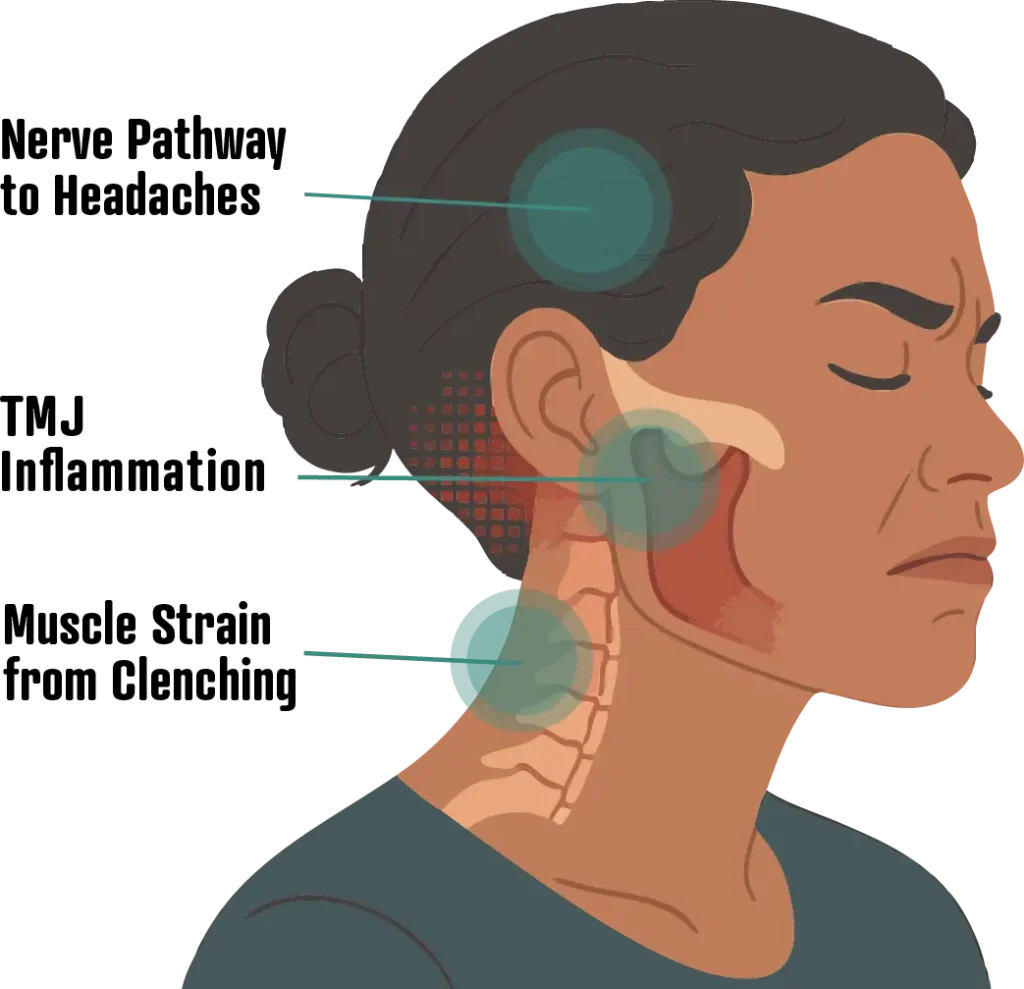
Understanding TMJ-Related Muscle Spasms
Muscle spasms are involuntary contractions that can cause tightness, pain, and restricted movement in the jaw, face, or neck. When the temporomandibular joint (TMJ) becomes strained or misaligned, the surrounding muscles must work harder to stabilize it. Over time, this overuse leads to fatigue, inflammation, and painful spasms that make simple activities — like talking, chewing, or even resting — uncomfortable.
At the TMJ & Sleep Therapy Centre of Raleigh-Durham, we focus on identifying the mechanical and neuromuscular causes of these spasms — whether they stem from chronic clenching, misalignment, stress, or trauma. By addressing the root dysfunction, we help muscles release tension naturally, restoring healthy movement and comfort.
When To Seek Treatment
Persistent Jaw Tightness
When your jaw feels tight or locks during chewing or talking, it may be from spasms caused by TMJ strain.
Neck and Shoulder Pain
TMJ muscle tension often extends into the neck and shoulders, creating stiffness and headaches over time.
Difficulty Opening or Closing
Restricted movement may signal that overworked jaw muscles are locking or guarding against joint instability.
Recurring Facial or Head Pain
Facial tension or temple pain that worsens with stress or chewing can be a sign of chronic muscle fatigue from TMJ dysfunction.
Relief begins with the right diagnosis
Muscle spasms caused by TMJ disorders can affect more than just your jaw — they can limit movement, disturb sleep, and cause daily pain. At the TMJ & Sleep Therapy Centre of Raleigh-Durham, we help you find lasting, natural relief through personalized, non-surgical care.
Frequently Asked Questions About Muscle Spasms
Muscle spasms can feel unpredictable, but they often follow clear mechanical patterns. Here are answers to some of the most common questions our patients ask about TMJ-related muscle pain and stiffness.
The jaw, neck, and shoulder muscles are part of the same kinetic chain. When jaw tension builds, nearby muscles — especially the trapezius and sternocleidomastoid — often tighten to compensate, creating radiating pain.
Yes. Stress increases clenching and grinding behaviors, which overload the jaw and trigger spasm patterns. Relaxation training and proper appliance therapy can help reduce this cycle.
These can offer temporary relief but rarely fix the cause. The best outcomes come from treating both the muscle strain and the underlying joint imbalance that causes it.
No. Our protocols are non-surgical and designed to gently restore balance using custom oral appliances, laser therapy, and targeted muscle rehabilitation.