

The sound usually comes from a displaced joint disc snapping back into place or uneven contact between joint surfaces. Inflammation or tension can worsen the movement irregularity.
Symptom
Does Your Jaw Click or Pop?
Experiencing jaw popping can signal a problem with the temporomandibular joint. At the TMJ & Sleep Therapy Centre of Raleigh-Durham, we prioritize restoring alignment and reducing the tension that causes these noises and related pain.

Understanding Jaw Clicking and TMJ Issues
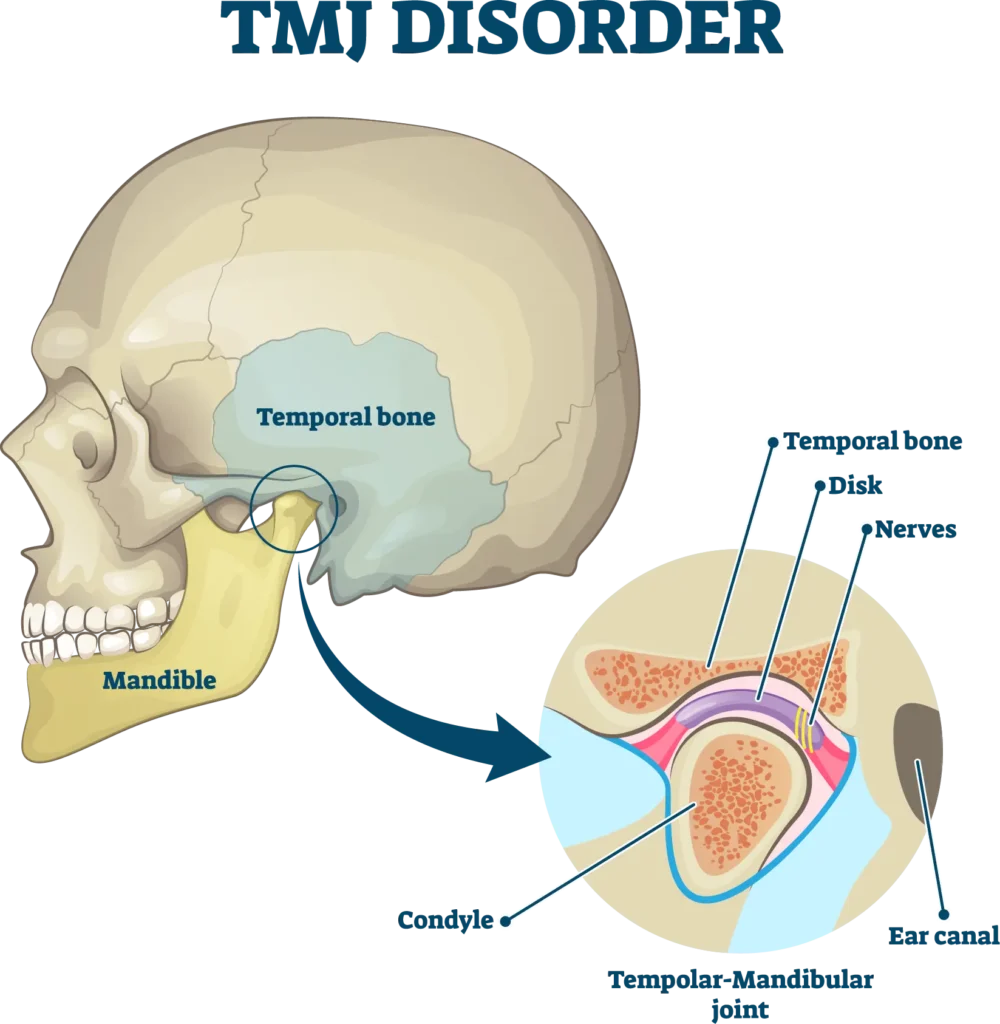
The clicking or popping sounds you hear when you open your mouth may not be insignificant. These noises can signal dysfunction in your jaw joint, known as the temporomandibular joint (TMJ). Such sounds often occur when the cushioning disc within the joint becomes misaligned or moves out of place, affecting the joint's proper functioning.
“Clicking or popping sounds from the TMJ indicate a change in the relationship between the joint surfaces and the articular disc.”
Source: StatPearls, National Library of Medicine

When the jaw functions well, movement should occur without noise or pain. However, conditions like inflammation, muscle imbalance, or malocclusion can lead to instability in the joint, causing the disc to shift forward. This can result in an audible pop as it moves back into its intended position. If left unaddressed, these problems might lead to discomfort, limited jaw mobility, or even jaw locking.
At the TMJ & Sleep Therapy Centre of Raleigh-Durham, we investigate the underlying mechanical causes of jaw popping through extensive TMJ assessments, which encompass imaging and bite analysis. Our aim is to provide non-invasive therapies that help realign the joint, restore balance, and ensure the joint's long-term health.
When To Seek Treatment
Recurring Clicking or Popping
Repetitive joint noises during chewing or yawning indicate an unstable TMJ disc or bite imbalance.
Pain with Movement
Clicking that’s accompanied by pain, tension, or stiffness may signal inflammation or internal derangement.
Jaw Locking or Catching
Difficulty fully opening or closing your mouth often occurs when the disc becomes temporarily trapped in the joint.
Headaches or Muscle Tension
Jaw popping can strain nearby muscles, triggering headaches and neck discomfort over time.
Relief begins with the right diagnosis
Jaw noises can signal early TMJ dysfunction. At the TMJ & Sleep Therapy Centre of Raleigh-Durham, we address the cause — not just the sound — with advanced diagnostics and gentle, restorative therapies.
Frequently Asked Questions About Jaw Popping
Jaw popping can range from an occasional annoyance to an early warning sign of a TMJ disorder. These answers cover common concerns and how treatment helps restore smooth, pain-free motion.
Not always, but persistent or painful popping may indicate developing joint damage. Early evaluation prevents chronic dysfunction and wear on the disc or bone.
Minor popping may fade with rest and posture correction. However, if it continues for more than a few weeks, it’s important to assess bite alignment and muscle strain before it worsens.
Customized oral appliances, muscle therapy, and laser treatments can reposition the joint and reduce inflammation. These non-surgical methods help restore natural motion and silence the pop.