

Breathing problems at night often occur when the soft tissues of the throat relax and narrow the airway. Factors like jaw position, nasal obstruction, weight, or muscle tone can all contribute. TMJ misalignment can further restrict airflow by altering tongue posture and jaw stability.
Symptom
Are You Struggling to Breathe at Night?
Waking up gasping, snoring loudly, or feeling unrefreshed can all point to airway obstruction during sleep. At the TMJ & Sleep Therapy Centre of Raleigh-Durham, we identify whether your breathing issues stem from airway restriction, jaw position, or muscle tone — and design treatment that helps you breathe freely again.

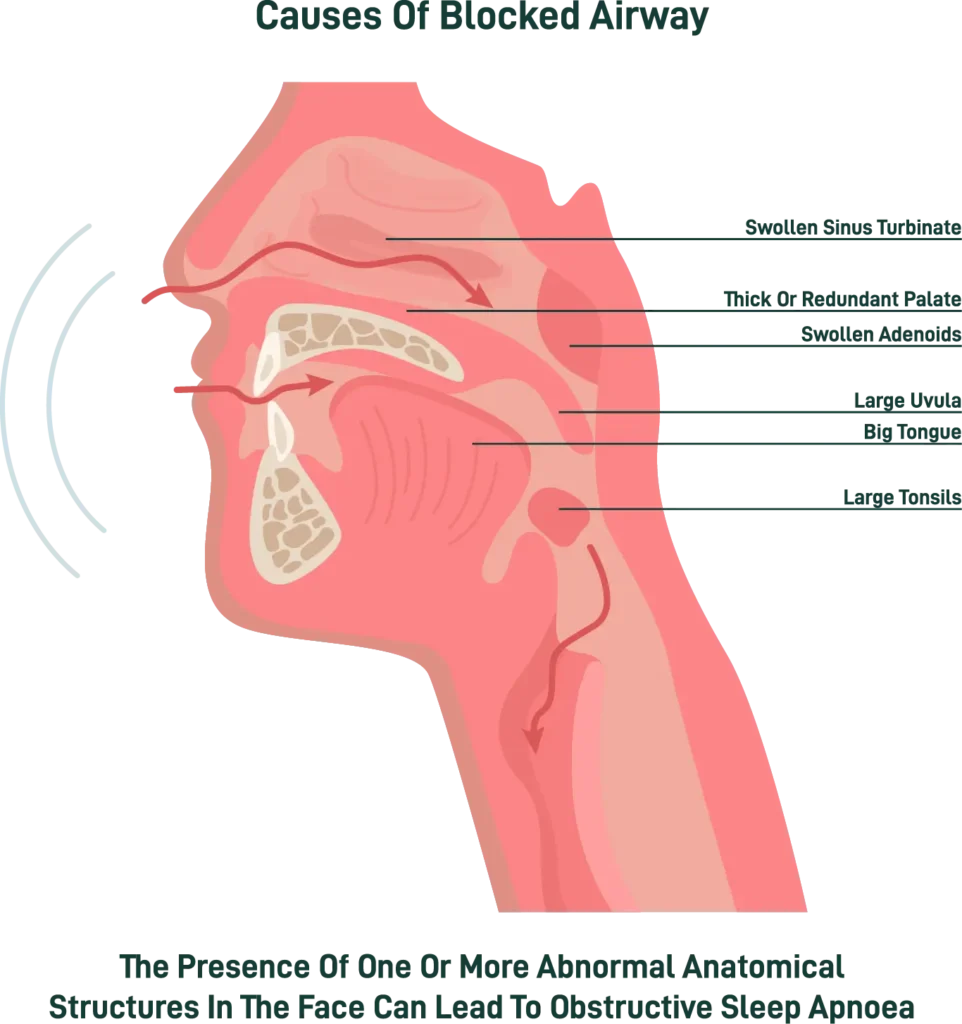
Understanding Difficulty Breathing and Sleep-Disordered Breathing
Difficulty breathing at night is one of the most overlooked signs of a sleep-related breathing disorder. Many people dismiss symptoms like snoring, restless sleep, or nighttime choking as normal — but they can be early indicators of airway collapse or obstruction during sleep.
“Sleep-disordered breathing affects nearly 1 in 4 adults and can contribute to fatigue, cardiovascular stress, and TMJ strain.”
When airflow is restricted, your body must work harder to breathe. This can cause repeated awakenings, clenching or grinding, and oxygen desaturation that stresses the heart and nervous system.
Over time, the muscles of the jaw, neck, and upper airway become overactive, further aggravating TMJ and postural problems.
At the TMJ & Sleep Therapy Centre of Raleigh-Durham, we look beyond traditional sleep testing to understand the structural causes of your breathing difficulty. Using imaging, airway analysis, and muscle evaluation, we design therapies that support healthy breathing — not just during sleep, but throughout your day.
When To Seek Treatment
Gasping or Choking at Night
Waking suddenly or struggling to breathe can signal airway obstruction or sleep apnea that needs evaluation.
Snoring or Mouth Breathing
Snoring and chronic mouth breathing often indicate narrowed nasal passages or jaw position issues affecting airflow.
Morning Headaches or Fatigue
Low oxygen during sleep can trigger vascular headaches and leave you feeling drained despite a full night’s rest.
Teeth Grinding or Clenching
When airflow is restricted, your body activates the jaw muscles to reopen the airway, often causing TMJ strain or worn teeth.
Relief begins with the right diagnosis
Difficulty breathing during sleep should never be ignored. At the TMJ & Sleep Therapy Centre of Raleigh-Durham, we specialize in identifying airway obstruction and restoring proper function through gentle, non-surgical therapies that improve rest and vitality.
Frequently Asked Questions About Difficulty Breathing
Many patients experiencing breathing problems during sleep do not realize the issue can start in the mouth and jaw. Here are some of the most common questions about difficulty breathing and sleep-disordered breathing.
Not always, but they are closely related. Sleep-disordered breathing is a spectrum that ranges from snoring to full obstructive sleep apnea. Even mild restriction can cause poor-quality sleep and daytime fatigue.
Yes. A retruded or misaligned jaw can push the tongue backward and reduce airway space. Correcting jaw position through oral appliance therapy can open the airway and improve both breathing and sleep quality.
We offer custom oral appliances that gently reposition the jaw and tongue to keep the airway open. Many patients find this more comfortable and easier to use than a CPAP. We also provide therapies that strengthen airway muscles and promote nasal breathing.
Untreated airway restriction can lead to chronic fatigue, TMJ pain, cardiovascular stress, and cognitive decline. Early intervention helps protect long-term health and quality of life.