

Not always. Occasional clicking can come from tight muscles or minor joint movement. However, when clicking becomes consistent, painful, or is paired with limited motion, it’s often a sign of structural imbalance in the TMJ.
Symptom
Is Your Jaw Clicking or Popping?
Occasional clicking can be harmless, but frequent or painful popping often signals a jaw joint imbalance. At the TMJ & Sleep Therapy Centre of Raleigh-Durham, we look beyond surface symptoms to uncover whether stress, muscle tension, or TMJ dysfunction is the true cause.

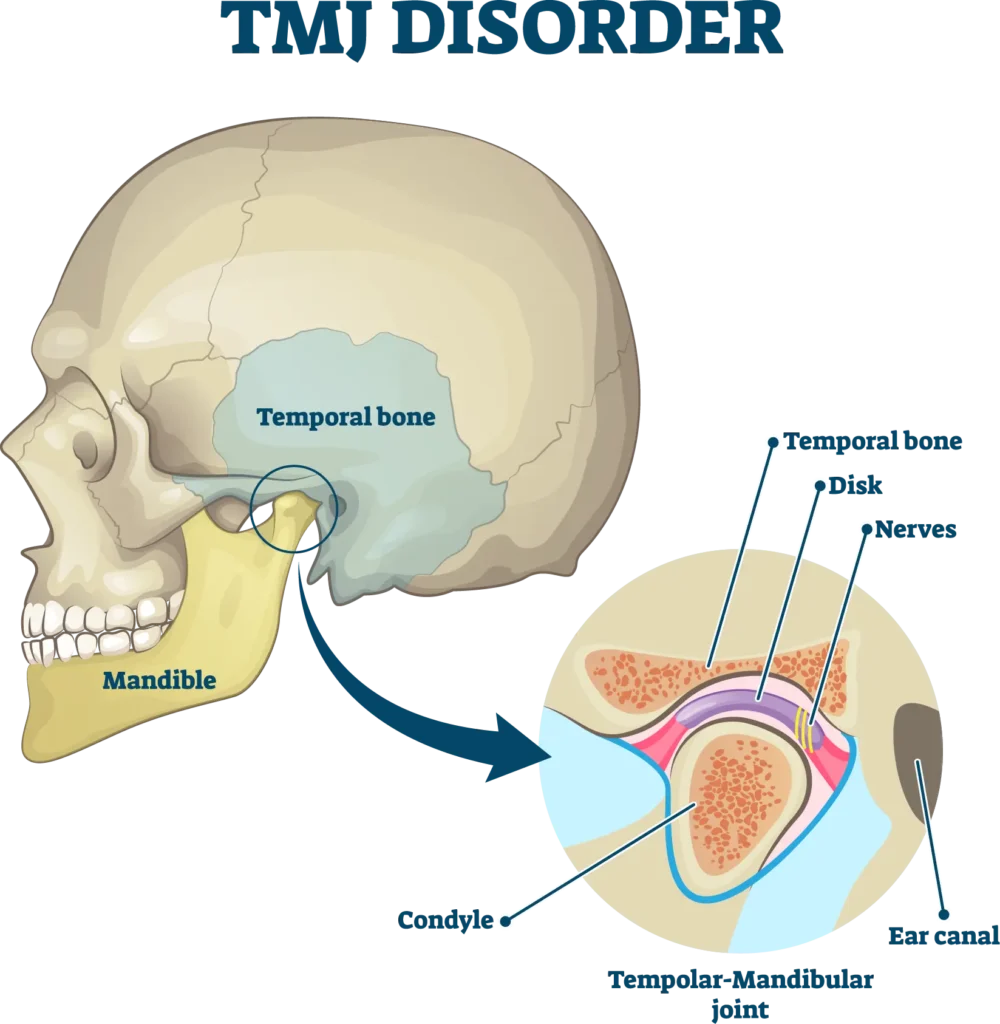
Understanding Jaw Clicking and Popping
A clicking or popping jaw is a common symptom patients notice when opening their mouth, chewing, or yawning. It can happen occasionally without concern, but frequent sounds accompanied by pain, locking, or shifting may point to an underlying TMJ disorder.
“Studies show that over one-third of adults experience jaw noise at some point, and while many cases are temporary, recurring symptoms can indicate internal joint dysfunction.”

Common causes include stress-related clenching, posture imbalances, trauma, or misaligned bites. However, the most persistent cases often involve mechanical changes in the temporomandibular joint (TMJ) — where the jawbone meets the skull. If left untreated, inflammation or disc displacement can lead to pain, limited range of motion, and even headaches or neck strain.
Our goal is to determine whether your clicking is simply muscle tension or an early sign of joint instability. By examining your airway, bite alignment, and muscle function, we can create a plan that protects the joint and restores comfortable motion.
When To Seek Treatment
Frequent or Loud Clicking
Repetitive sounds when eating or speaking may mean the TMJ disc is slipping out of alignment during movement.
Pain or Tenderness
Pain near the jaw, ear, or temple often indicates inflammation in the joint or surrounding muscles.
Locking or Limited Opening
Difficulty opening or closing your mouth smoothly can suggest the TMJ disc is displaced or restricted.
Headaches or Ear Fullness
Jaw misalignment can strain neck muscles and compress nearby nerves, leading to referred pain or ear pressure.
Relief begins with the right diagnosis
Clicking may seem minor, but it’s your body’s way of warning you that the joint isn’t working smoothly. Our team at the TMJ & Sleep Therapy Centre of Raleigh-Durham specializes in uncovering the true cause and restoring natural movement through non-surgical care.
Frequently Asked Questions About Clicking
We often hear from patients who have lived with jaw clicking for years, unsure if it means something serious. Here are a few questions to help you understand when it’s time to take action.
Yes. Chronic stress leads to teeth grinding or jaw clenching, which overloads the joint and muscles. Even though stress may seem like the cause, it’s often a trigger that worsens an existing joint issue.
Mild clicking may resolve with rest and relaxation techniques. If it persists beyond a few weeks or is worsening, professional evaluation can prevent long-term damage and chronic pain.
Absolutely. We use custom orthotics, laser therapy, and myofunctional training to restore normal joint movement and reduce inflammation without surgery or medications.
Ignoring the symptom can allow small dysfunctions to worsen, leading to disc displacement, jaw locking, or chronic facial pain. Early intervention helps protect the joint and maintain normal function.