

Yes. Sleep-disordered breathing and airway restriction can trigger restlessness, poor concentration, and irritability — symptoms that overlap significantly with ADHD. Studies show that treating airway dysfunction can dramatically improve focus and mood.
Symptom
ADHD-like Behavior
Not every attention or behavior issue is neurological — many begin with poor sleep or restricted breathing. At the TMJ & Sleep Therapy Centre of Raleigh-Durham, we identify airway and structural issues that may mimic ADHD symptoms.

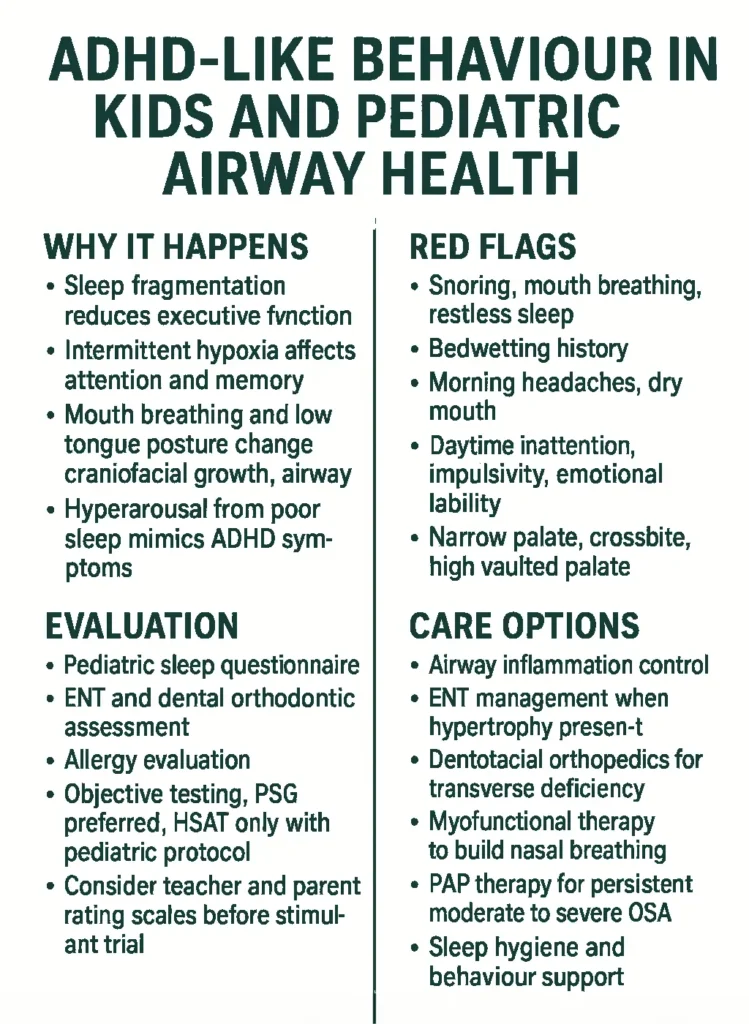
When Focus Problems Start With the Airway
Many parents are surprised to learn that attention problems, restlessness, or emotional outbursts can stem from sleep-disordered breathing rather than true ADHD. When the airway narrows during sleep, the body experiences repeated drops in oxygen — fragmenting rest and altering how a child’s brain regulates behavior and focus during the day.
If a child’s jaw, tongue, or airway development limits nasal breathing, sleep becomes lighter and more fragmented. These children often wake unrefreshed, grind their teeth, or show signs of clenching. Over time, their nervous systems adapt by staying in a heightened state of alertness — the same behaviors often labeled as ADHD.
At the TMJ & Sleep Therapy Centre of Raleigh-Durham, our diagnostic approach screens for airway dysfunction, tongue position, and facial growth patterns that may contribute to behavioral or focus challenges.
When To Seek Treatment
Restless or Interrupted Sleep
Frequent tossing, turning, or nighttime sweating can indicate difficulty maintaining deep sleep due to poor airflow.
Difficulty Paying Attention
Oxygen deprivation during sleep can impair daytime focus, memory, and emotional regulation.
Emotional Outbursts or Irritability
Poor-quality sleep affects mood stability and impulse control, often mistaken for behavioral disorders.
Mouth Breathing or Snoring
Chronic mouth breathing and snoring are major indicators of airway restriction and poor sleep oxygenation.
Relief begins with the right diagnosis
Behavioral symptoms may not always start in the brain — sometimes, they begin in the airway. At the TMJ & Sleep Therapy Centre of Raleigh-Durham, we help children breathe, sleep, and focus better with natural, restorative care.
Frequently Asked Questions About ADHD-like Behavior
Behavior changes in children often have a physiological cause. Here’s what parents frequently ask when exploring whether their child’s “ADHD-like” behavior could actually be linked to breathing or sleep patterns.
Look for mouth breathing, snoring, frequent night waking, or excessive movement during sleep. Children may also grind their teeth or wake up groggy and irritable — signs of airway obstruction.
At the TMJ & Sleep Therapy Centre of Raleigh-Durham, we use airway expansion therapy, myofunctional exercises, and non-surgical orthopedics to restore healthy nasal breathing and restful sleep — addressing the root cause of behavioral symptoms.
Every child is different, but many families report reduced reliance on ADHD medications once sleep quality and oxygen levels improve. We work collaboratively with pediatricians and behavioral specialists to ensure holistic care.