TMJ & Sleep Therapy Centre of Raleigh-Durham

Sleep Apnea

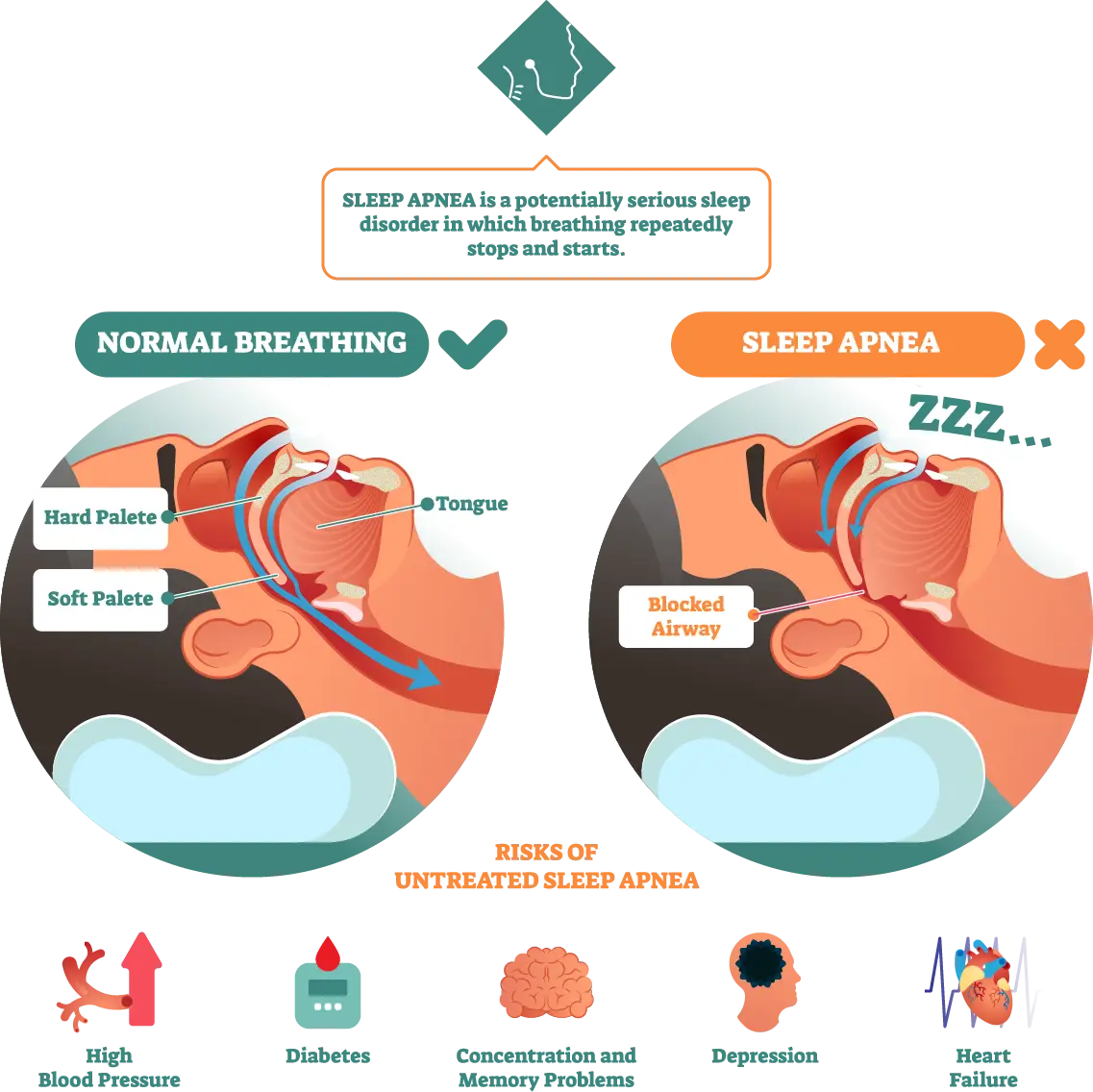
Sleep apnea is a disorder where a person will have a regular interval or pause in his/her breath while sleeping. Pause in the breath may occur around 25 times or more in an hour. After the pause, when the normal breathing starts, a choking noise or snort sound maybe heard.

Overview of Sleep Apnea - TMJ International
TMJ International
Over 70 Centres Located in 7 Countries

Over 70 Centres

LOCATED IN 7 COUNTRIES
Decades of Combined Experience

Decades

OF COMBINED EXPERIENCE
Tens of Thousands of Patients Treated

Tens of Thousands

OF PATIENTS TREATED
Non-invasive Solutions

Sleep Apnea Treatment in Raleigh, NC

Sleep apnea is a sleep-related breathing disorder that can be difficult to recognize without help from a bed partner, family member, or sleep professional. Because it happens during sleep, many people do not realize they are waking repeatedly, breathing irregularly, or experiencing drops in oxygen throughout the night.

Obstructive sleep apnea is the most common type of sleep apnea. It occurs when the airway becomes partially or fully blocked during sleep, often causing loud snoring, pauses in breathing, gasping, choking, restless sleep, and daytime fatigue. While sleep apnea is more common in adults who are overweight, it can affect people of all ages, including children with enlarged tonsils, airway restriction, or jaw development concerns.

At the TMJ & Sleep Therapy Centre of Raleigh-Durham, Dr. Charles Ferzli and his team help patients identify signs of sleep-disordered breathing and explore treatment options that support better sleep, healthier breathing, and improved quality of life.

Why Sleep Apnea Should Be Treated

Untreated sleep apnea can affect more than sleep quality. Repeated breathing interruptions may lower oxygen levels, strain the cardiovascular system, and increase the risk of high blood pressure, heart disease, stroke, diabetes, irregular heartbeat, and daytime accidents caused by fatigue. Getting evaluated early can help protect both your long-term health and daily energy.

When To Seek This Treatment

Diagnosis

Airway Collapse

Soft tissue in the throat relaxes and obstructs airflow during sleep.

Diagnosis

Tongue Position

The tongue falls backward and blocks the airway, especially while lying down.

Diagnosis

A retruded or small jaw reduces airway space and increases obstruction risk.

Jaw Position
Diagnosis

Low muscle tone allows tissues to collapse during sleep.

Low muscle tone allows tissues to collapse during sleep.
Diagnosis

Excess Weight

Additional tissue around the throat and neck narrows the airway.
Understanding Sleep Apnea at the TMJ & Sleep Therapy Centre of New Orleans

Don't Wait! Get In Touch Today!

Or Call Now and Schedule a Consultation
(919) 323-4242

Goals Of Treatment

Restore Healthy Breathing

Ensure the airway stays open during sleep to maintain oxygen flow and reduce nighttime interruptions.

Improve Sleep Quality

Help patients achieve deeper, more restful sleep so they wake feeling refreshed and alert.

Reduce Health Risks

Lower the risk of cardiovascular disease, stroke, diabetes, and other conditions linked to untreated sleep apnea.

Provide Comfortable Solutions

Offer therapies patients can tolerate long-term, avoiding CPAP dependence and invasive surgery whenever possible.

TMJ & Sleep Therapy Centre of Raleigh-Durham

Why Choose Us?

Medication & Surgery

Why Traditional Methods Fail

  • Low CPAP Compliance
    Many patients struggle with masks and hoses, making long-term use difficult
  • One-Size Devices
    Generic appliances may not reposition the jaw or tongue effectively
  • Surgical Risks
    Procedures are invasive, carry risks, and don’t guarantee permanent results
  • Symptom-Only Focus
    Approaches that don’t strengthen the airway often fail to maintain long-term improvements

Our Non Surgical Approach

  • Custom Sleep Appliances
    Reposition the jaw and tongue to keep the airway open naturally during sleep
  • Myofunctional Therapy
    Strengthen oral and airway muscles while encouraging nasal breathing
  • Laser Therapy
    Tighten soft tissues and reduce snoring without surgery
  • Collaborative Care
    Work alongside sleep physicians when advanced testing or combined treatment is needed
TMJ & Sleep Therapy Centre of Raleigh-Durham

Our Sleep Apnea Services

Snoring Treatment
TMJ & Sleep Therapy Centre

Snoring treatment focuses on improving nighttime breathing using non-surgical dental therapies designed to keep the airway open during sleep.

Find Out More
Sleep Appliances
TMJ & Sleep Therapy Centre

Custom sleep appliances gently reposition the jaw to keep the airway open, reducing snoring and treating sleep apnea without CPAP.

Find Out More
Myofunctional Therapy
TMJ & Sleep Therapy Centre

Myofunctional therapy retrains oral and facial muscles to improve breathing, jaw function, and sleep quality in TMJ and airway disorders.

Find Out More
Laser Therapy
TMJ & Sleep Therapy Centre

A gentle, non-invasive treatment that reduces pain, decreases inflammation, and accelerates healing for TMJ and sleep disorders.

Find Out More
Our Commitment

Better Sleep, Better Health

Sleep apnea is more than snoring — it’s a serious condition that affects your health and quality of life. At the TMJ & Sleep Therapy Centre of Raleigh-Durham, we provide comfortable, non-surgical solutions that restore restful sleep and protect long-term health. Don’t wait — your best sleep is within reach.

Message Us
You are worth it

Sleep Apnea & Whole-Body Health

Untreated sleep apnea doesn’t just cause poor sleep — it affects the entire body. Patients with sleep apnea are more likely to struggle with high blood pressure, weight gain, chronic fatigue, and impaired immune function. Treating sleep apnea helps restore energy, balance hormones, and reduce the risk of long-term disease.

FAQ

Frequently Asked Questions About Sleep Apnea

Sleep Apnea is one of the specialized services we provide at the TMJ & Sleep Therapy Centre of Raleigh-Durham. Our focus is on identifying the root causes behind your symptoms and delivering safe, non-surgical solutions that support long-term health and comfort.

Sleep apnea is a sleep-related breathing disorder where breathing repeatedly slows, becomes shallow, or temporarily stops during sleep. These interruptions can lower oxygen levels, disrupt deep sleep, and cause daytime fatigue.

Warning signs include loud snoring, gasping or choking during sleep, pauses in breathing, morning headaches, dry mouth, daytime tiredness, trouble concentrating, irritability, and restless sleep.

Yes. Many people do not know they have sleep apnea because symptoms happen while they are asleep. A spouse, partner, parent, or family member is often the first person to notice snoring, gasping, or breathing pauses.

Not always, but loud or frequent snoring can be a major warning sign. Snoring that happens with gasping, choking, daytime fatigue, morning headaches, or witnessed breathing pauses should be evaluated.

Obstructive sleep apnea happens when the airway becomes partially or fully blocked during sleep. This may be related to tongue position, soft tissue collapse, jaw structure, excess weight, enlarged tonsils, or poor airway muscle tone.

Yes. Untreated sleep apnea may increase the risk of high blood pressure, heart disease, stroke, diabetes, irregular heartbeat, daytime fatigue, and driving or workplace accidents.

Sleep apnea is usually diagnosed through a sleep study, either at home or in a sleep center. A sleep study measures breathing patterns, oxygen levels, sleep interruptions, and other signs of sleep-disordered breathing.

Not always. CPAP is effective for many patients, but some people struggle to tolerate it. Depending on the type and severity of sleep apnea, oral appliance therapy or other airway-focused treatments may be recommended.

“`

“`html
{ "@context": "https://schema.org", "@type": "FAQPage", "mainEntity": [ { "@type": "Question", "name": "What is sleep apnea?", "acceptedAnswer": { "@type": "Answer", "text": "Sleep apnea is a sleep-related breathing disorder where breathing repeatedly slows, becomes shallow, or temporarily stops during sleep. These interruptions can lower oxygen levels, disrupt deep sleep, and cause daytime fatigue." } }, { "@type": "Question", "name": "What are the warning signs of sleep apnea?", "acceptedAnswer": { "@type": "Answer", "text": "Warning signs include loud snoring, gasping or choking during sleep, pauses in breathing, morning headaches, dry mouth, daytime tiredness, trouble concentrating, irritability, and restless sleep." } }, { "@type": "Question", "name": "Can you have sleep apnea without knowing it?", "acceptedAnswer": { "@type": "Answer", "text": "Yes. Many people do not know they have sleep apnea because symptoms happen while they are asleep. A spouse, partner, parent, or family member is often the first person to notice snoring, gasping, or breathing pauses." } }, { "@type": "Question", "name": "Is snoring always a sign of sleep apnea?", "acceptedAnswer": { "@type": "Answer", "text": "Not always, but loud or frequent snoring can be a major warning sign. Snoring that happens with gasping, choking, daytime fatigue, morning headaches, or witnessed breathing pauses should be evaluated." } }, { "@type": "Question", "name": "What causes obstructive sleep apnea?", "acceptedAnswer": { "@type": "Answer", "text": "Obstructive sleep apnea happens when the airway becomes partially or fully blocked during sleep. This may be related to tongue position, soft tissue collapse, jaw structure, excess weight, enlarged tonsils, or poor airway muscle tone." } }, { "@type": "Question", "name": "Is sleep apnea dangerous if untreated?", "acceptedAnswer": { "@type": "Answer", "text": "Yes. Untreated sleep apnea may increase the risk of high blood pressure, heart disease, stroke, diabetes, irregular heartbeat, daytime fatigue, and driving or workplace accidents." } }, { "@type": "Question", "name": "How is sleep apnea diagnosed?", "acceptedAnswer": { "@type": "Answer", "text": "Sleep apnea is usually diagnosed through a sleep study, either at home or in a sleep center. A sleep study measures breathing patterns, oxygen levels, sleep interruptions, and other signs of sleep-disordered breathing." } }, { "@type": "Question", "name": "Do I have to use a CPAP machine?", "acceptedAnswer": { "@type": "Answer", "text": "Not always. CPAP is effective for many patients, but some people struggle to tolerate it. Depending on the type and severity of sleep apnea, oral appliance therapy or other airway-focused treatments may be recommended." } } ] }

TMJ Logo

TMJ & Sleep Therapy Centre

INTERNATIONAL

Global Expertise
Local Care

As proud members of TMJ International, we are part of a global team dedicated to advancing collaborative care in TMJ disorders and sleep therapy. Together, we bring innovation, expertise, and compassionate treatment to help patients find lasting relief and a healthier quality of life.

If you’re struggling with jaw pain, headaches, or sleep issues, the TMJ & Sleep Therapy Centre of Raleigh-Durham is here to help. Our team specializes in non-surgical TMJ and sleep therapy solutions designed to restore comfort and improve your quality of life.
Get In Touch
TMJ International
Over 70 Centres Located in 7 Countries

Over 70 Centres

LOCATED IN 7 COUNTRIES
Decades of Combined Experience

Decades

OF COMBINED EXPERIENCE
Tens of Thousands of Patients Treated

Tens of Thousands

OF PATIENTS TREATED